
Thrive
Thrive is an AI-powered, gamified fitness and wellness app designed to help people build sustainable health habits—especially those who feel overwhelmed by traditional fitness tracking apps. In partnership with the American Heart Association, our team explored how emerging technologies can close—not widen—gaps in health outcomes and access, and designed a product that makes health achievable, inclusive, and motivating.
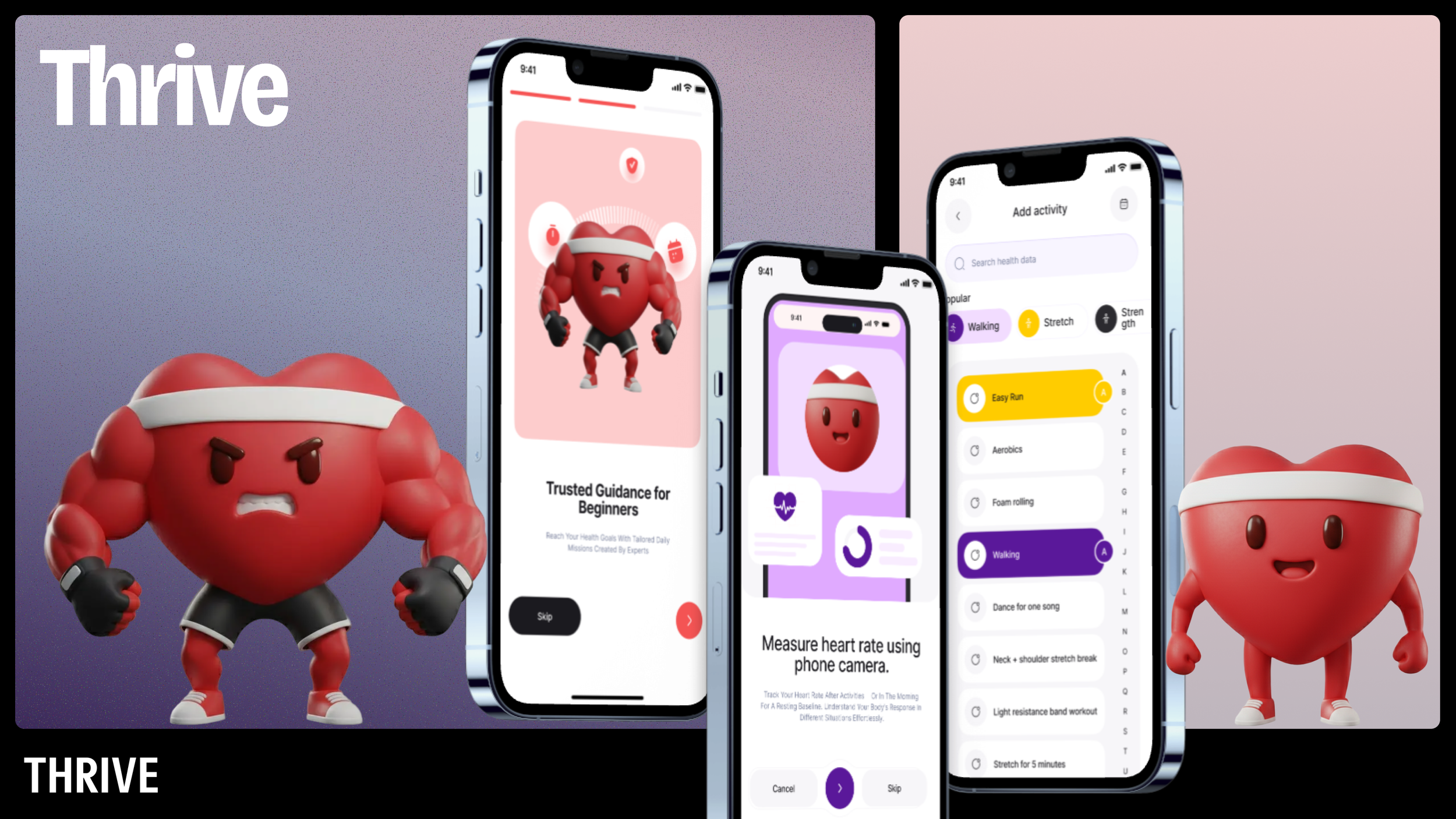
Turning wellness into an adventure
Thrive
2025
Role: Product Designer & Developer (Designed key UI/UX flows + Translated AHA Life’s Essential 8 into gamified mini-game concepts + Supported prototyping and app build)
Platform: Mobile App (iOS / Android concept)
Tools: Figma (UI/UX Design) · Xcode + SwiftUI (iOS Prototyping) · Adobe Illustrator (Visual Assets), Product Thinking · Interaction Design · Gamification Design · Rapid Prototyping
Team: Tina Jiang, Parissa Teli, Aashwini Samir Vachhani, Joanna Wang, Jyue-An Yao
Guided by AHA Life’s Essential 8
-
The American Heart Association (AHA) is one of the most trusted and influential nonprofit health organizations in the United States, focused on improving cardiovascular health and reducing deaths caused by heart disease and stroke. Beyond research and medical guidelines, the AHA also publishes evidence-based frameworks that help translate health science into everyday lifestyle actions—making prevention more understandable and actionable for the public.
-
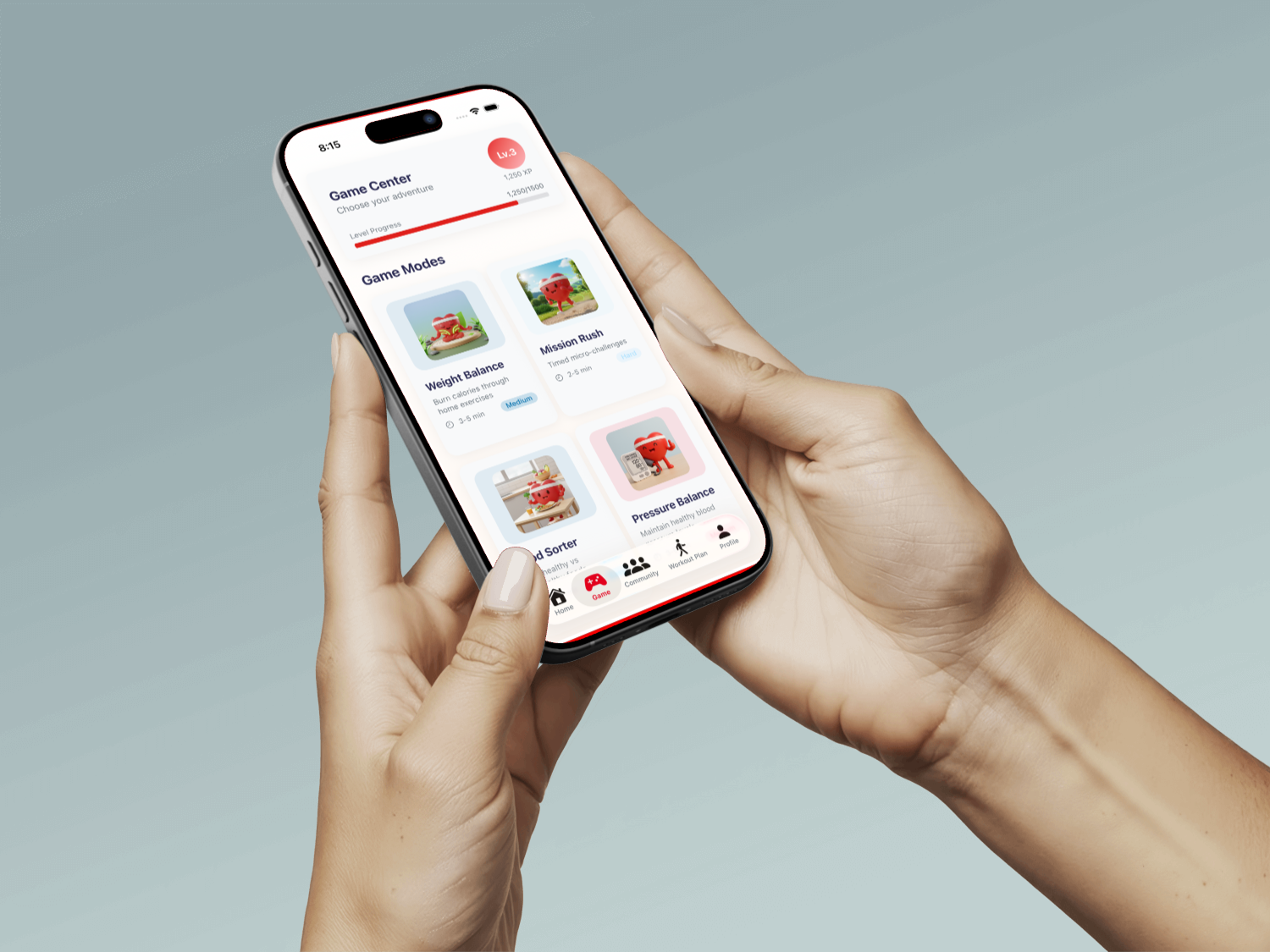
The American Heart Association (AHA) Life’s Essential 8 is a science-based framework for improving cardiovascular health. It defines eight key behaviors and health factors that strongly influence long-term heart and overall wellness. The eight areas include: Eat Better, Be More Active, Quit Tobacco, Get Healthy Sleep, Manage Weight, Control Cholesterol, Manage Blood Sugar, and Manage Blood Pressure. Thrive uses this framework as its foundation, mapping each category into interactive mini-games and habit-building missions—so users can improve real health outcomes through a more playful and supportive experience.
-
We approached Thrive as a behavior-design challenge rather than a tracking tool. Instead of only showing progress metrics, Thrive transforms wellness into a daily experience users want to return to through three principles: gamification, personalization, and emotional support. We designed mini-games and micro-missions that translate complex health goals into fun and achievable actions. Users receive encouragement and adaptive recommendations through an AI assistant, while community challenges and reward systems reinforce long-term habit formation. This approach turns wellness from a “should-do” task into a motivating, engaging journey that helps users build routines step-by-step.
-
Thrive is directly aligned with the AHA’s wellness philosophy by building its entire product concept around Life’s Essential 8—a framework that defines eight key behaviors and health factors proven to support long-term heart and overall health. Instead of presenting the framework as a checklist or clinical guideline, Thrive transforms each category into interactive mini-games, missions, and habit loops, helping users practice healthier behaviors in a way that feels motivating and sustainable. This approach reinforces the AHA’s core belief: meaningful health improvement comes from consistent daily habits, so Thrive focuses on making those habits easier to start, rewarding to maintain, and emotionally supportive over time.
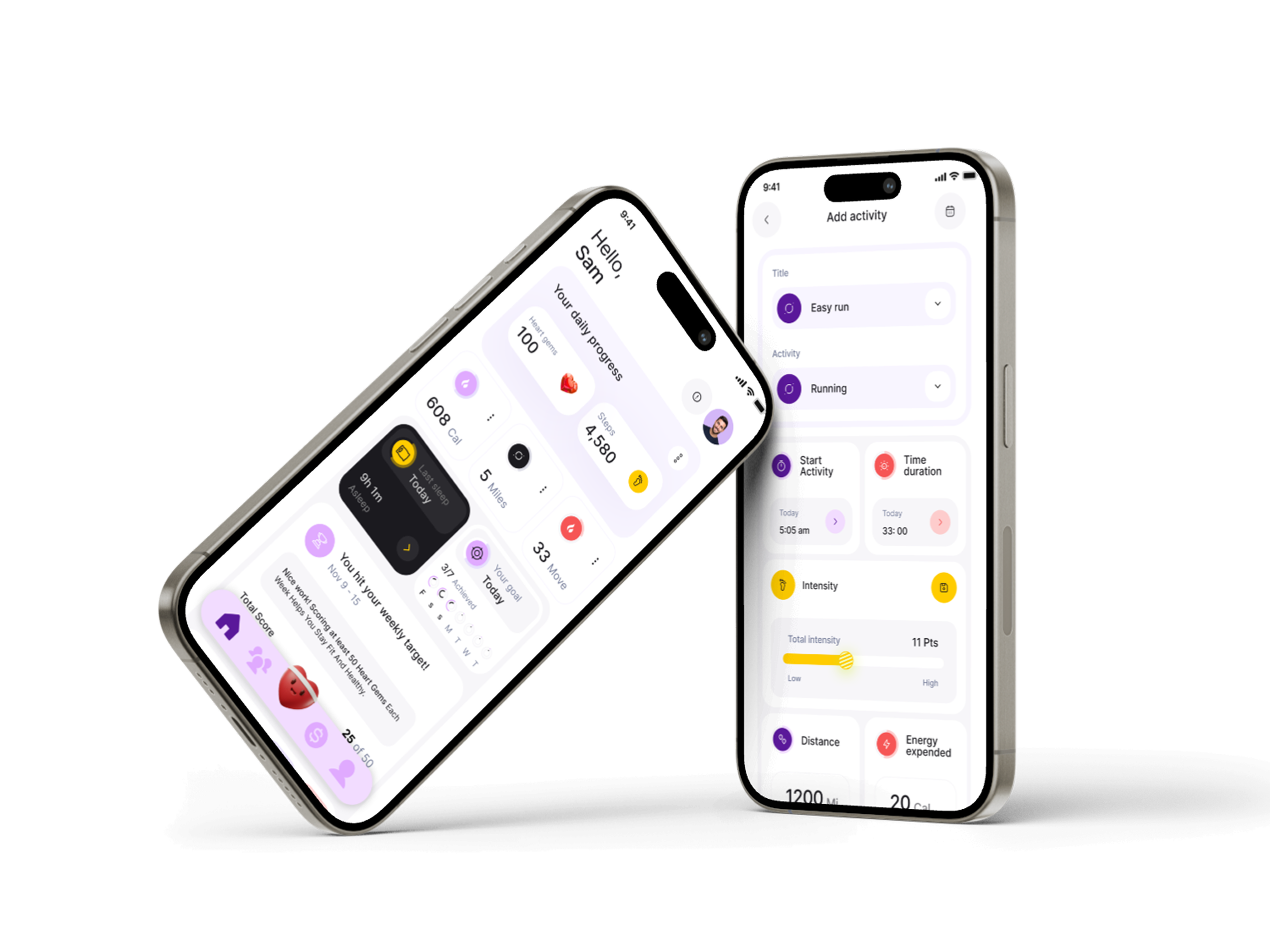
The Problem We Set Out to Solve
Wellness apps often fail for a simple reason:
they treat health as tracking, not behavior change.
People don’t lack knowledge—they lack consistency, and consistency collapses when wellness feels like pressure. Many apps focus on metrics and streaks, but don’t provide emotional encouragement, achievable goals, or engaging routines. As a result, users stop after initial motivation fades.
One clear data point reflects this gap:
Less than half of U.S. adults (47%) meet recommended weekly physical activity levels. This CDC surveillance metric is based on the Physical Activity Guidelines for Americans and measures the share of adults achieving both aerobic and muscle-strengthening targets.
Thrive addresses this by transforming wellness from a “should-do” task into an experience built around positive reinforcement and long-term habit formation.
Our Design Goal
Design a wellness app that feels:
Motivating (not guilt-driven)
Lightweight (easy to start, easy to continue)
Personal (adapted to user goals and capacity)
Evidence-based (grounded in real health science)
Engaging long-term (beyond the first two weeks)
Direction 1
Universal Health Record (UHR) + Patient Chatbot
During early research, we explored a different direction for Thrive: a Universal Health Record (UHR) system combined with an AI patient chatbot. The concept addresses one of the most overlooked barriers in healthcare—fragmented medical information and slow communication between patients, primary care, and specialists.
In today’s system, critical patient history is often distributed across hospitals, clinics, labs, and pharmacies, making it difficult for providers to assemble a complete picture quickly. This delays diagnoses, increases redundant testing, and disproportionately impacts patients who face structural barriers to consistent care access.
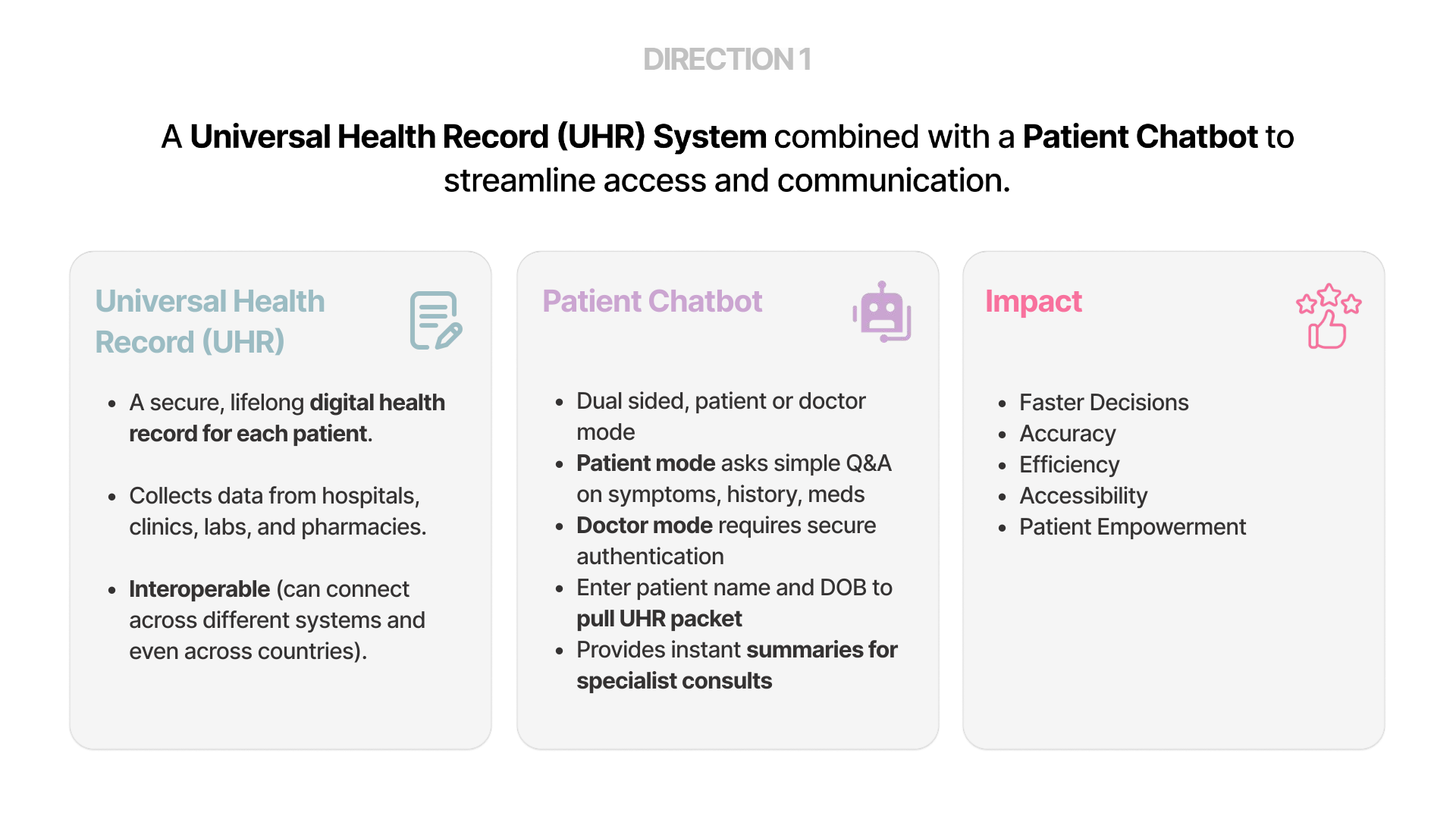
Our proposed UHR system acts as a secure, lifelong record layer, while the chatbot serves as a conversational interface that helps patients report symptoms clearly and helps doctors retrieve structured summaries instantly. Together, they streamline care coordination and enable faster, safer decision-making—especially when specialist consultations are needed.
-
Universal Health Record (UHR)
A secure, lifelong, interoperable digital record that:
consolidates patient data across hospitals, clinics, labs, and pharmacies
creates a unified health “snapshot” for long-term care continuity
supports interoperability across systems and providers
Patient + Doctor Chatbot (Dual Mode)
A conversational AI assistant with two modes:
Patient mode: guides users through symptom intake, history, medications, and allergies in plain language
Doctor mode: requires secure authentication, then enables fast retrieval of patient records and summaries
The chatbot can also generate a structured UHR packet—a clean, shareable summary that supports faster referral workflows and specialist handoffs.
-
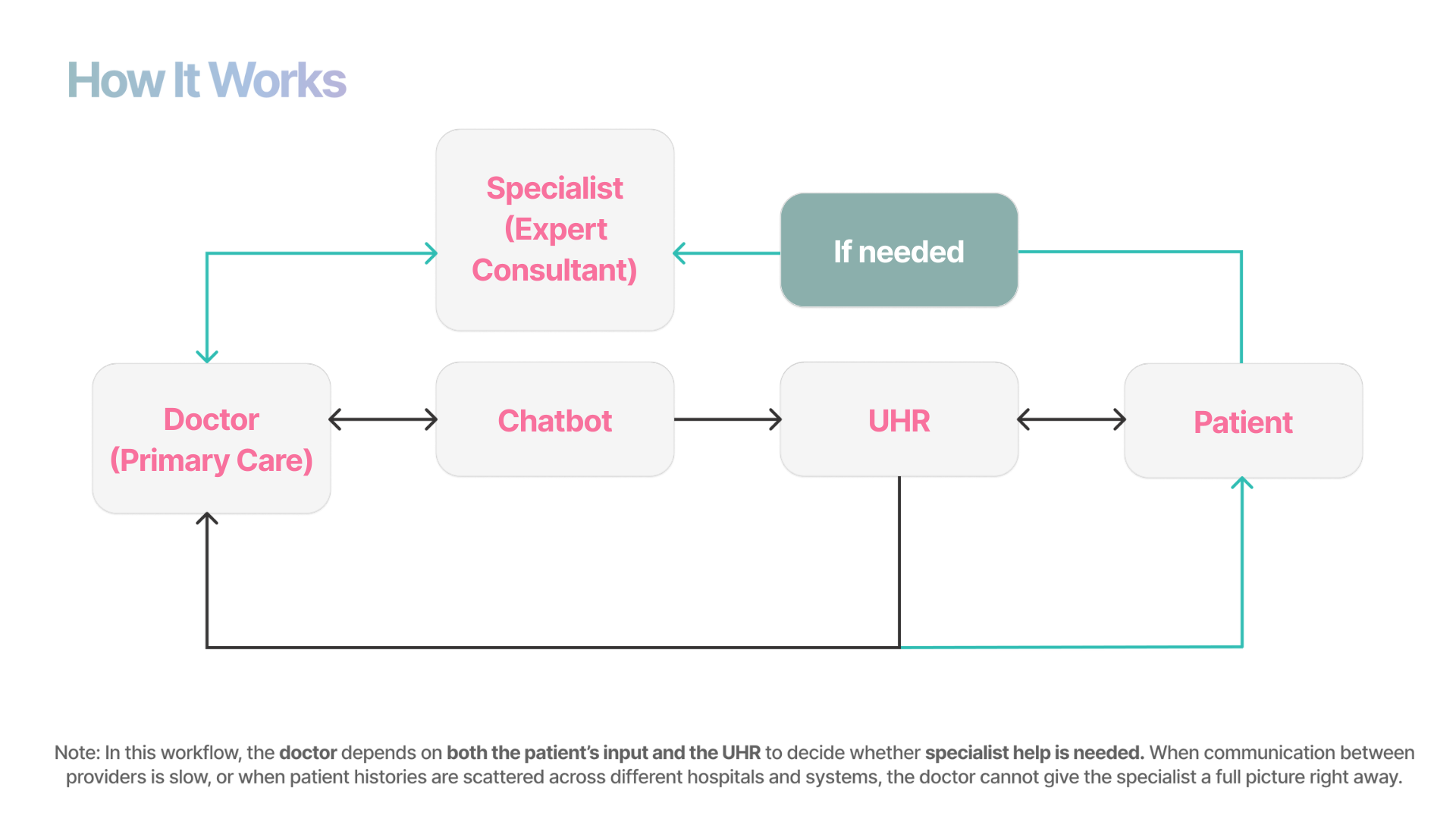
When a patient begins care:
The chatbot collects structured intake (symptoms, timeline, meds, history)
The UHR stores / retrieves relevant verified health data
The primary care doctor reviews a clean “doctor snapshot” generated from the UHR packet
If specialist consultation is needed, the UHR packet can be shared securely—reducing delays and missing context
This workflow is designed to reduce the system’s dependence on faxing, repeated questions, and back-and-forth record chasing.
-
This direction aimed to improve healthcare access by enabling:
faster clinical decisions
greater accuracy in patient history interpretation
efficiency through less duplication and admin overhead
accessibility for patients with communication barriers
patient empowerment through clearer health ownership
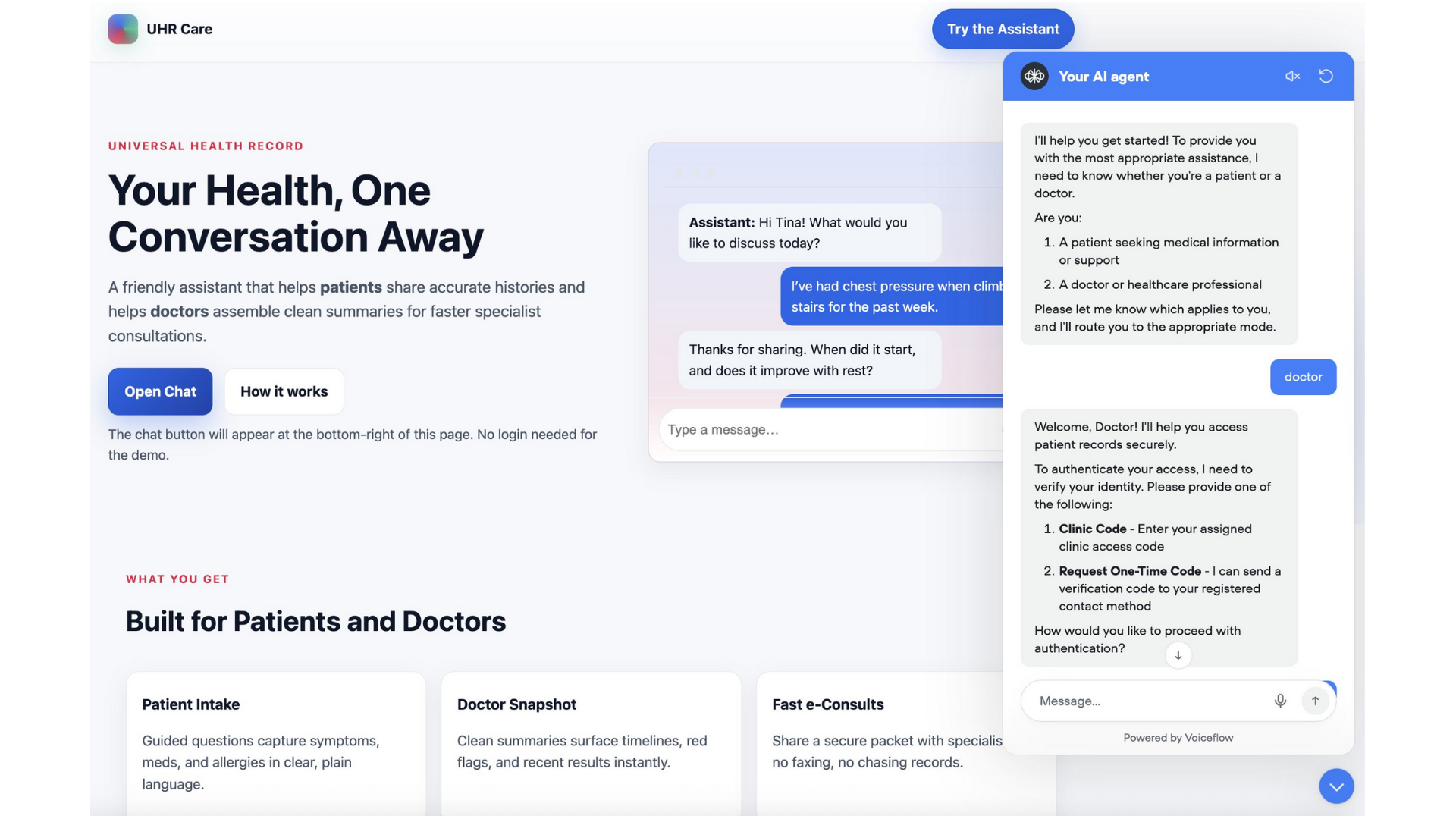
UHR + Chatbot Demo
Original Thrive Research Question
How might we ensure AI closes the gaps in health outcomes and access?
Before designing the final Thrive concept, we reframed the problem as more than motivation or “willpower.” The real risk is that low engagement in digital health tools is actively widening healthcare disparities. If only certain populations can stay engaged—or even access the technology required—then health outcomes become more unequal over time.
The Early App Concept
To address this research problem, our early prototype explored 3 AI-powered features:
Conversational AI Bot
Designed to reduce communication and accessibility barriers by helping users ask questions, describe symptoms, and navigate health information more confidently.
AI-Powered Gamification
Personalized game and activity recommendations based on engagement history—designed to increase retention and make habit-building feel rewarding.
AI-Powered Medical Records
A safety layer that supports more accurate activity recommendations by grounding suggestions in the user’s medical status—reducing risk and improving personalization.
AI Assistant + Reward System + Profile
This direction helped us validate that access and equity are shaped by more than motivation—communication barriers and fragmented health history can directly reduce care quality. However, implementing a universal health record ecosystem depends on multi-stakeholder coordination (hospitals, clinics, pharmacies, specialists) and long-term regulatory and technical alignment. To deliver impact within a realistic timeline, we pivoted to a product direction that could be adopted independently by users while still addressing equity and access. Thrive emerged from this pivot as a low-friction wellness system designed to maximize engagement through personalization, game mechanics, and AI support.
All 8 Mini-Game Demos
Click here to explore the demo for all 8 mini-games and see how Thrive transforms AHA Life’s Essential 8 into interactive daily missions.
Project Closing
Thrive ultimately became a design exploration of how AI + behavior design can make preventive health more accessible and sustainable. Grounded in AHA’s Life’s Essential 8, the project demonstrates a wellness model where health science is translated into everyday routines through personalization, gamification, and supportive guidance.
By designing for motivation, inclusivity, and long-term retention, Thrive shifts wellness from a high-pressure tracking experience into a lightweight system of daily momentum. The project concludes with a validated direction: engagement is not just a UX metric—it’s the key mechanism for closing gaps in health outcomes.
“Thrive shows how wellness can be designed as a daily experience—where small, consistent actions add up to meaningful health outcomes.”