
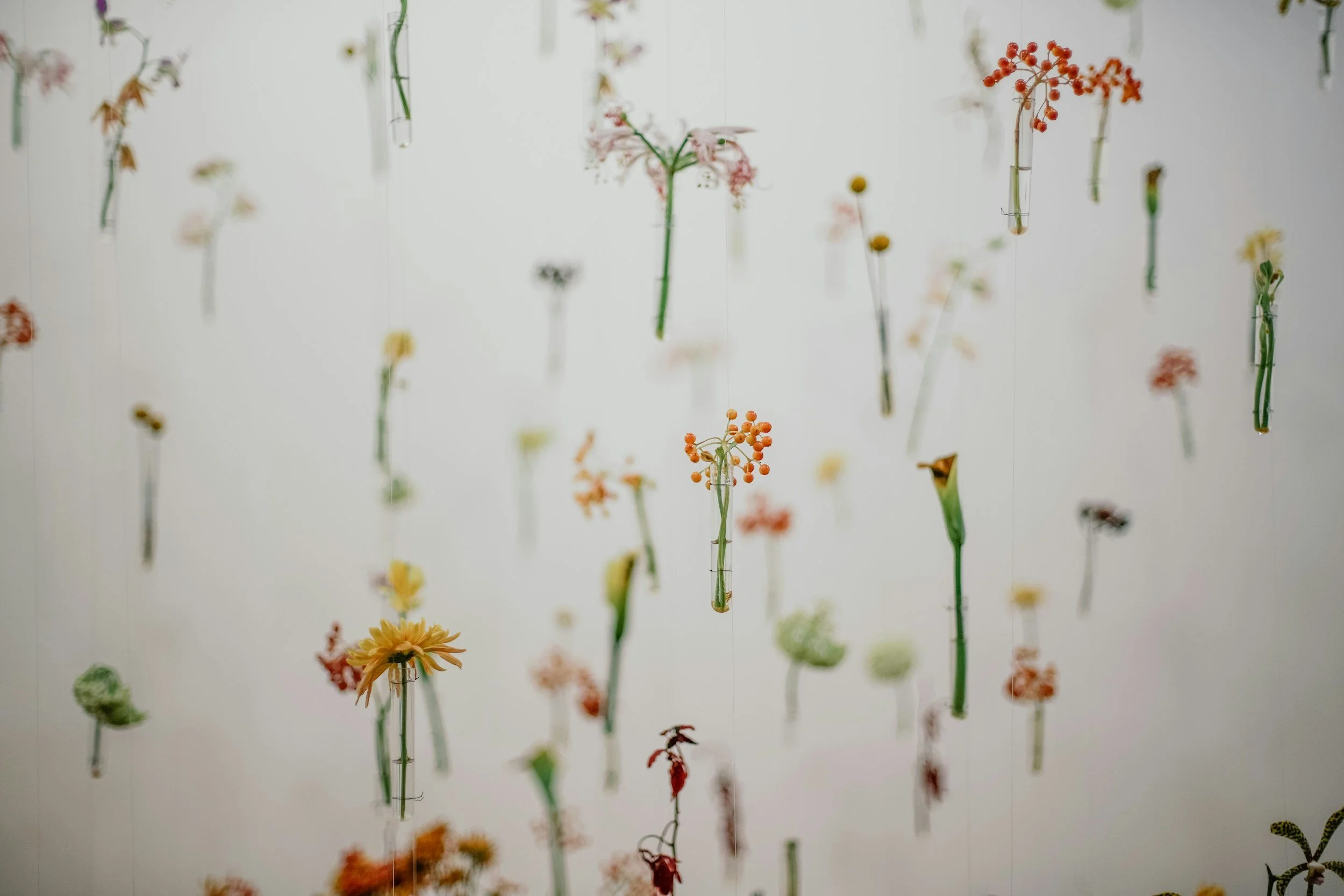
Immersive fragrance storytelling for Apple Vision ProScentSync
ScentSync is a spatial computing experience that turns fragrance notes into interactive environments — helping users understand scent through mood, symbolism, and movement instead of static descriptions.
ScentSync
2025
Role: Developer & 3D Immersive Builder
Platform: visionOS / Apple Vision Pro
Tools: Xcode, SwiftUI, RealityKit, Reality Composer Pro, Rhino, Blender
Team: Tina Jiang, Maya Mitchell, Yifan Chen, Khoi Nguyen
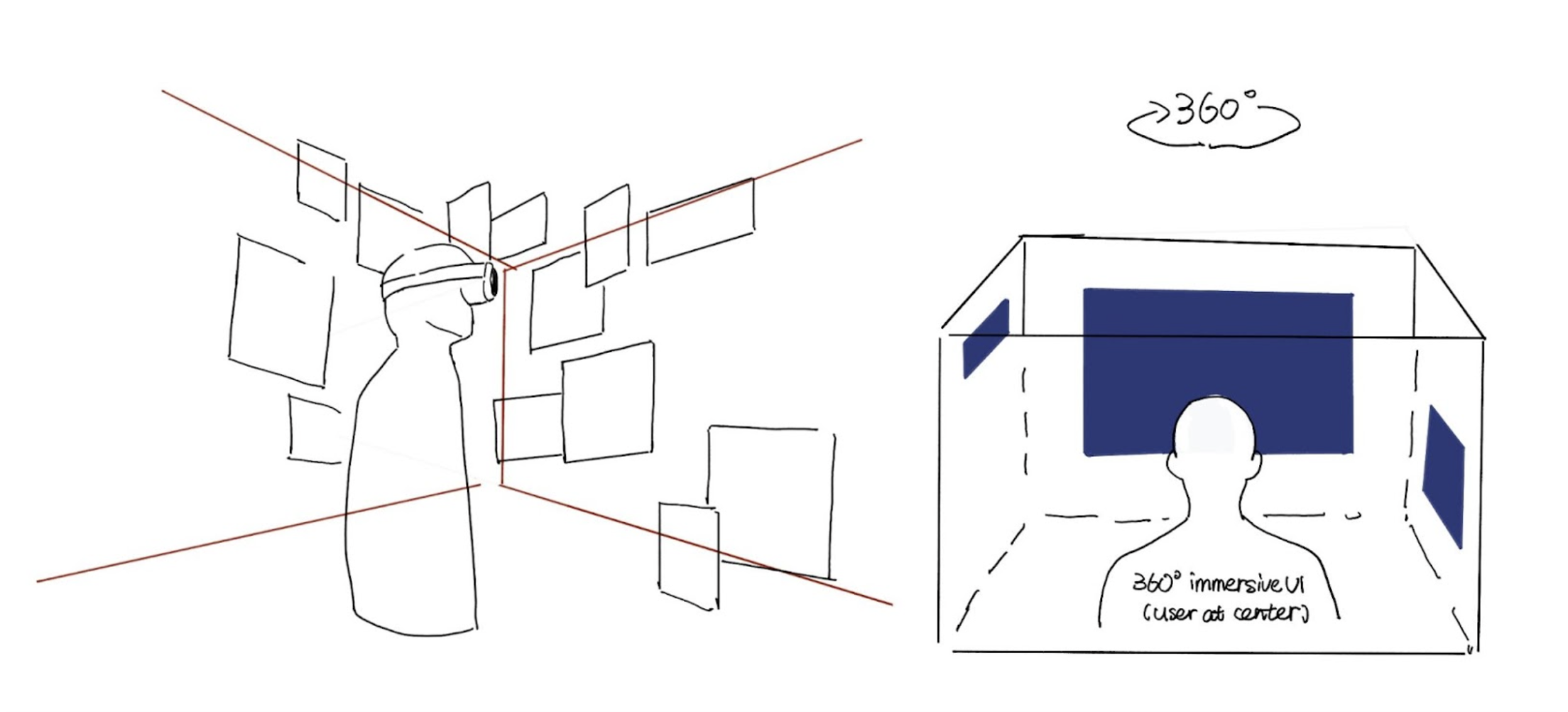
Fragrance is emotional. It’s also hard to communicate—especially online. Most digital fragrance discovery depends on marketing language (“clean,” “fresh,” “warm”) that feels vague and abstract, leaving users unsure of what a scent actually feels like.
ScentSync asks a simple question:
What if you could explore a fragrance the way you explore a place?
Spatial computing offers a new medium for sensory storytelling. Rather than describing a scent, we wanted users to step into it.
Why this project
ScentSync translates fragrance profiles into immersive worlds. Each scent becomes a spatial scene built around:
symbolic 3D objects (representing key notes),
interactive moments (touch, trigger, response),
sound + narration (to shape mood and memory).
Instead of reading notes, users discover them—through light, texture, motion, and space.
ScentSync is structured as a guided fragrance journey:
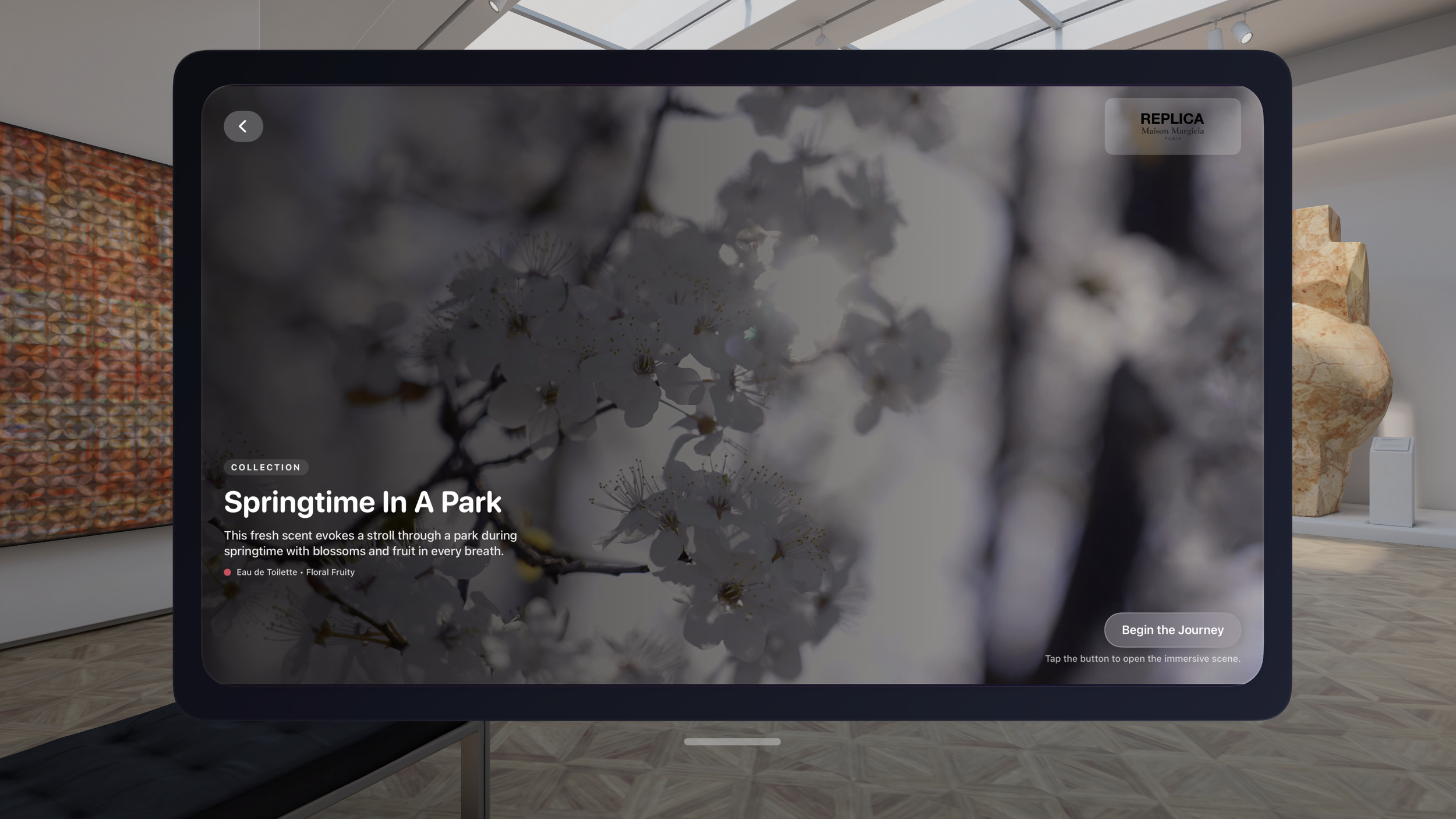
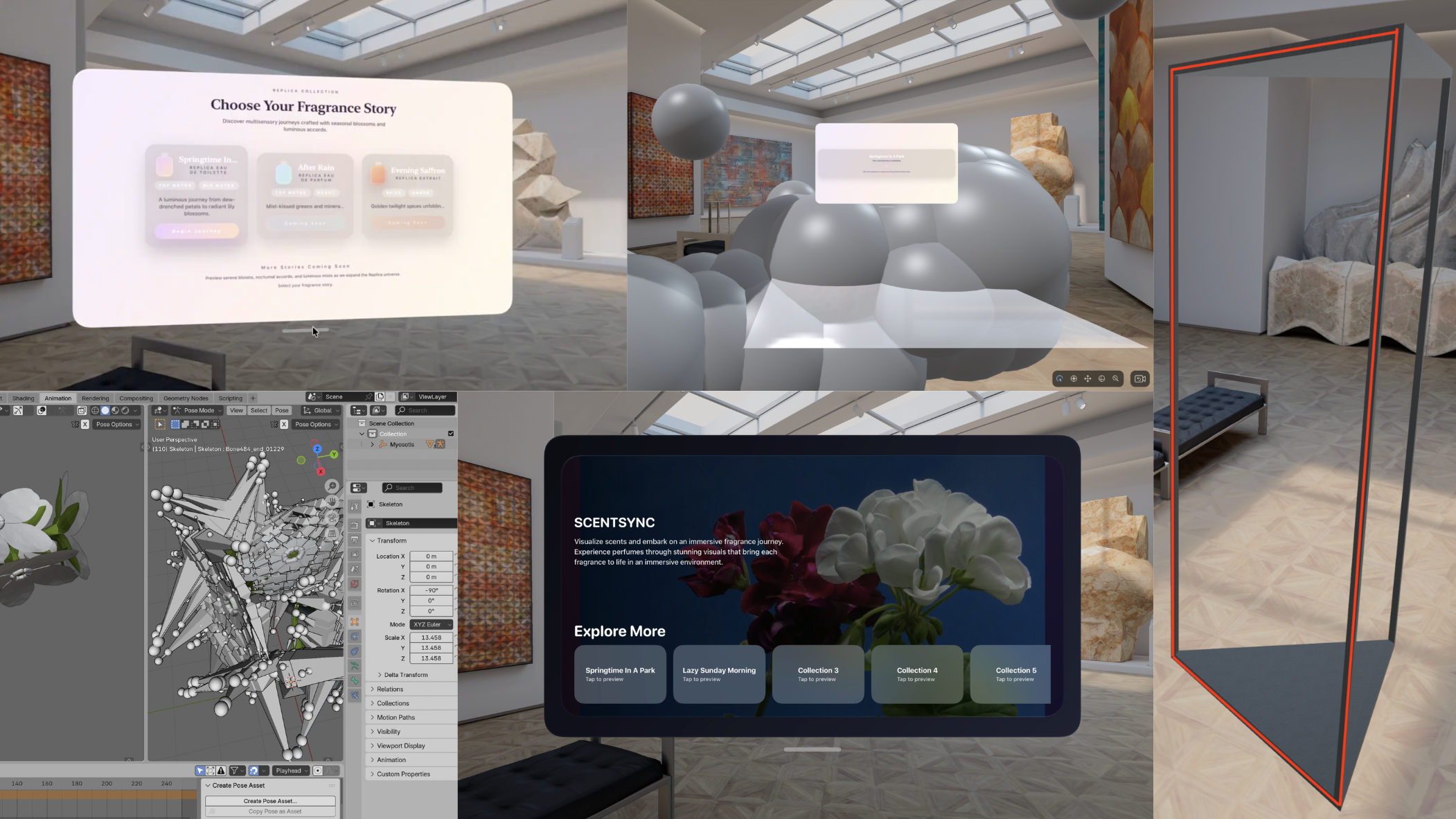
Select a fragrance from the main menu
Enter an immersive portal into a themed world
Interact with note-based objects that respond to user attention
Listen to ambient sound and narration to deepen emotional clarity
Transition between fragrance scenes seamlessly
Return and explore another scent
Immersive scenes
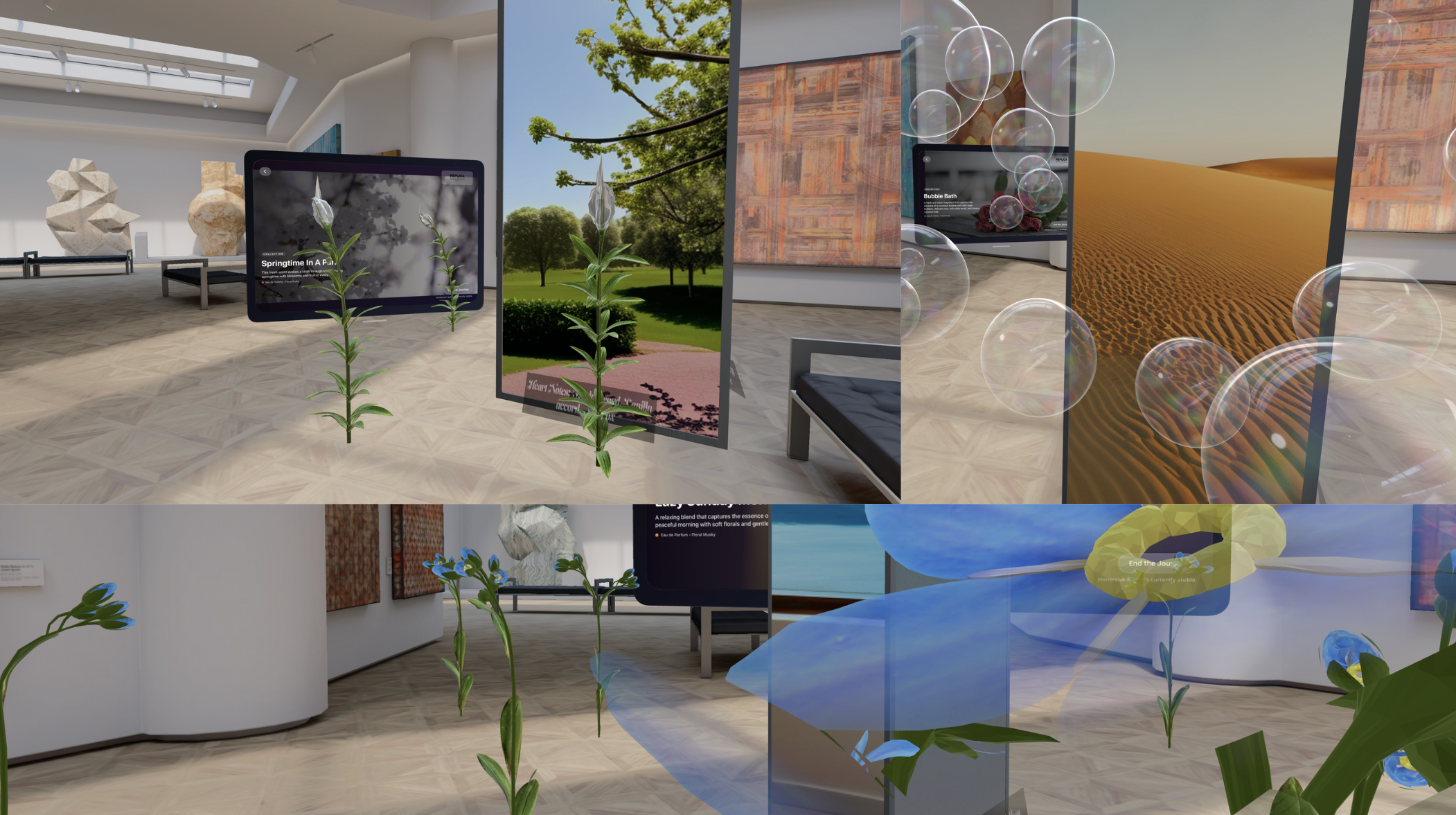
We built three core immersive scenes, each representing a distinct fragrance mood:
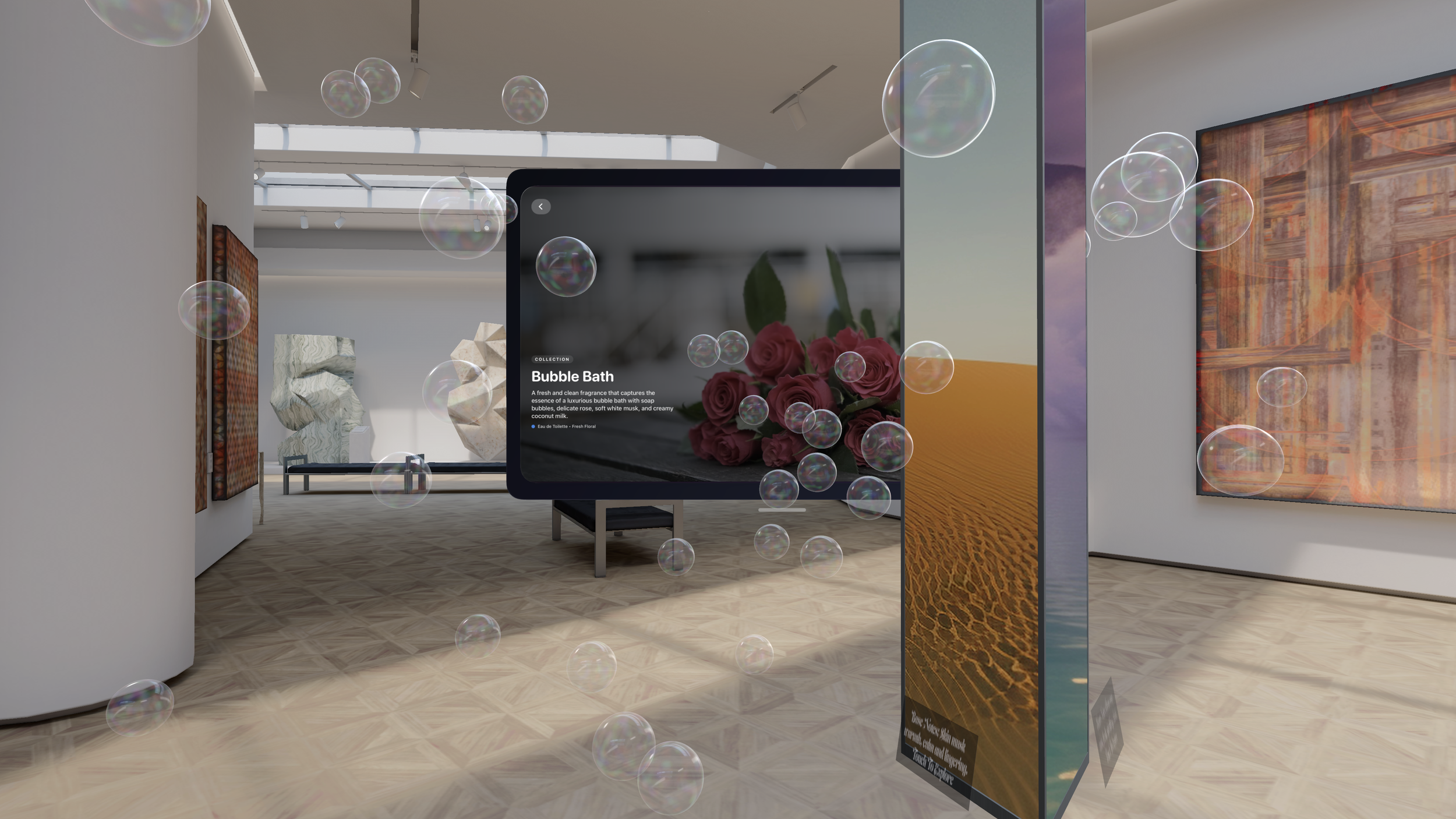
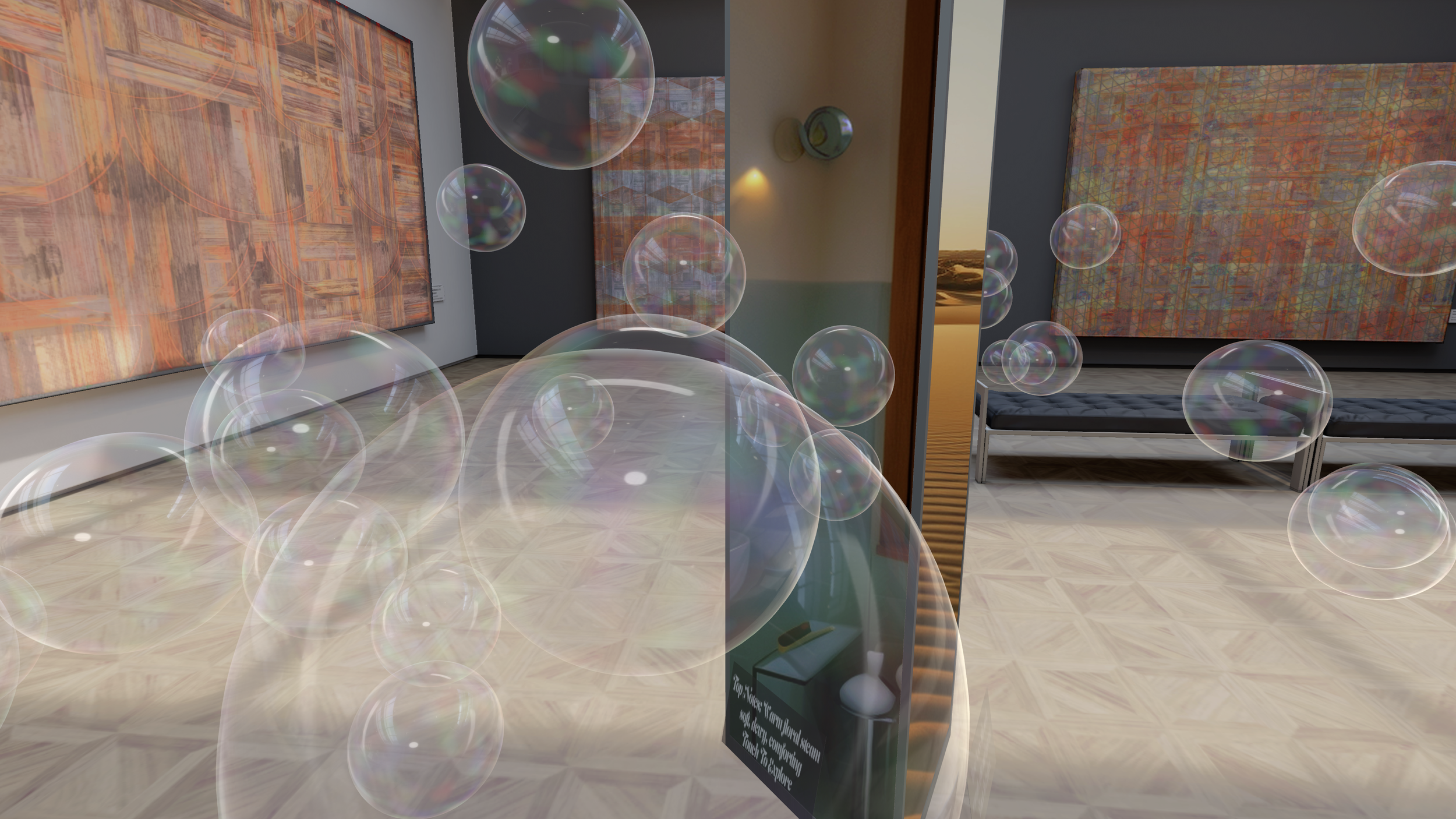
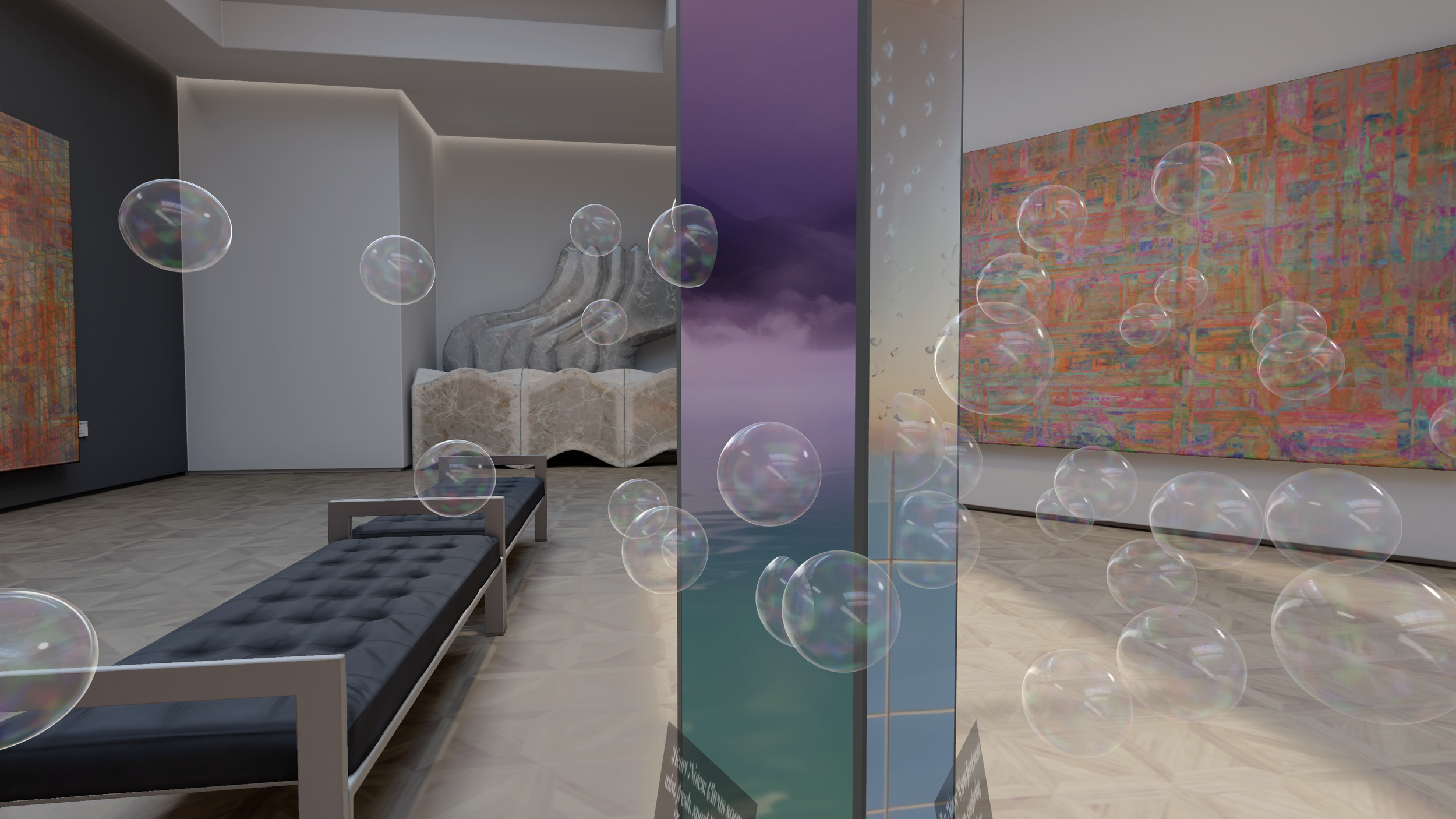
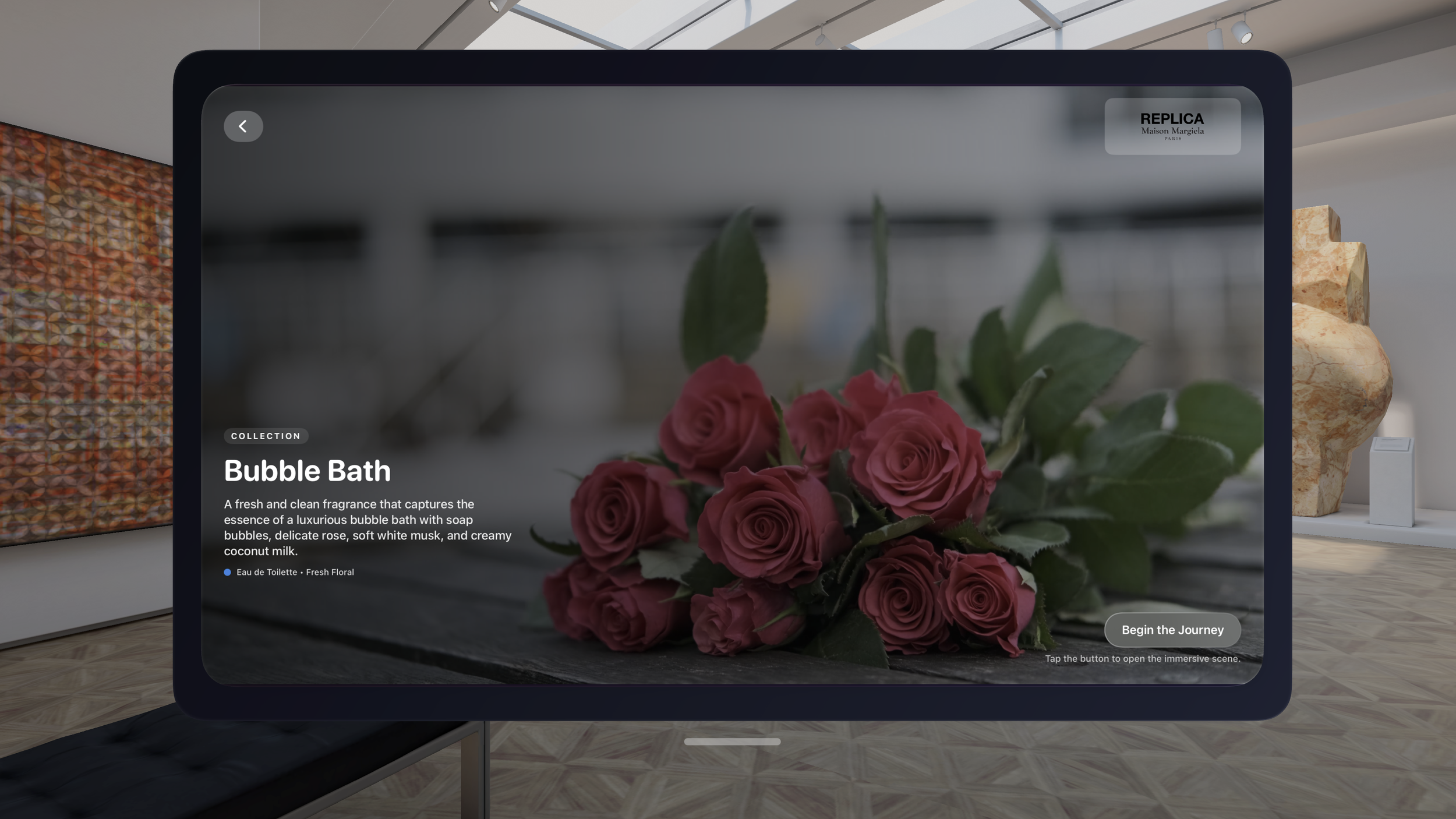
Bubble → Bubble Bath
A playful, weightless space that communicates comfort and freshness through floating forms and soft motion.
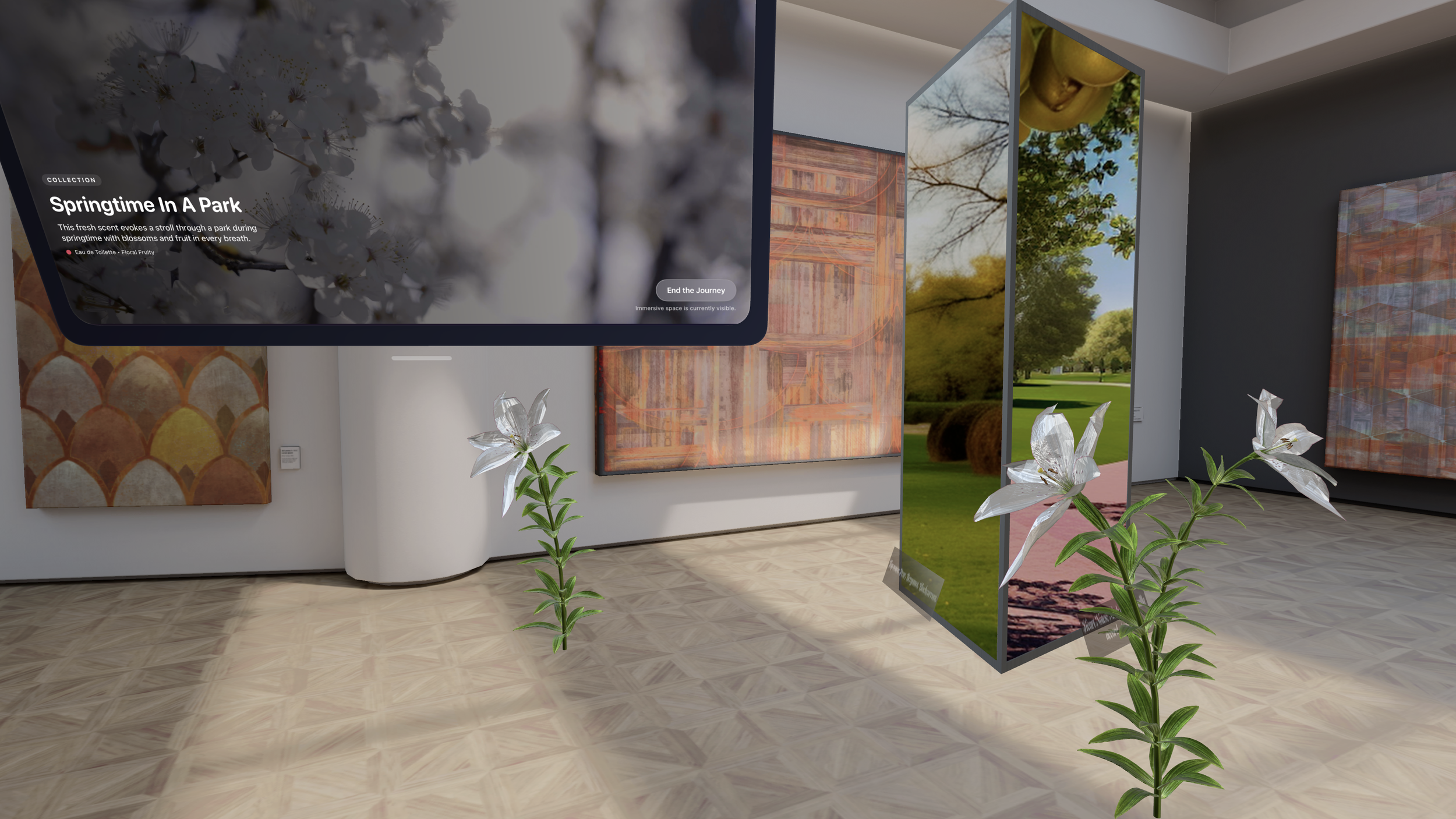
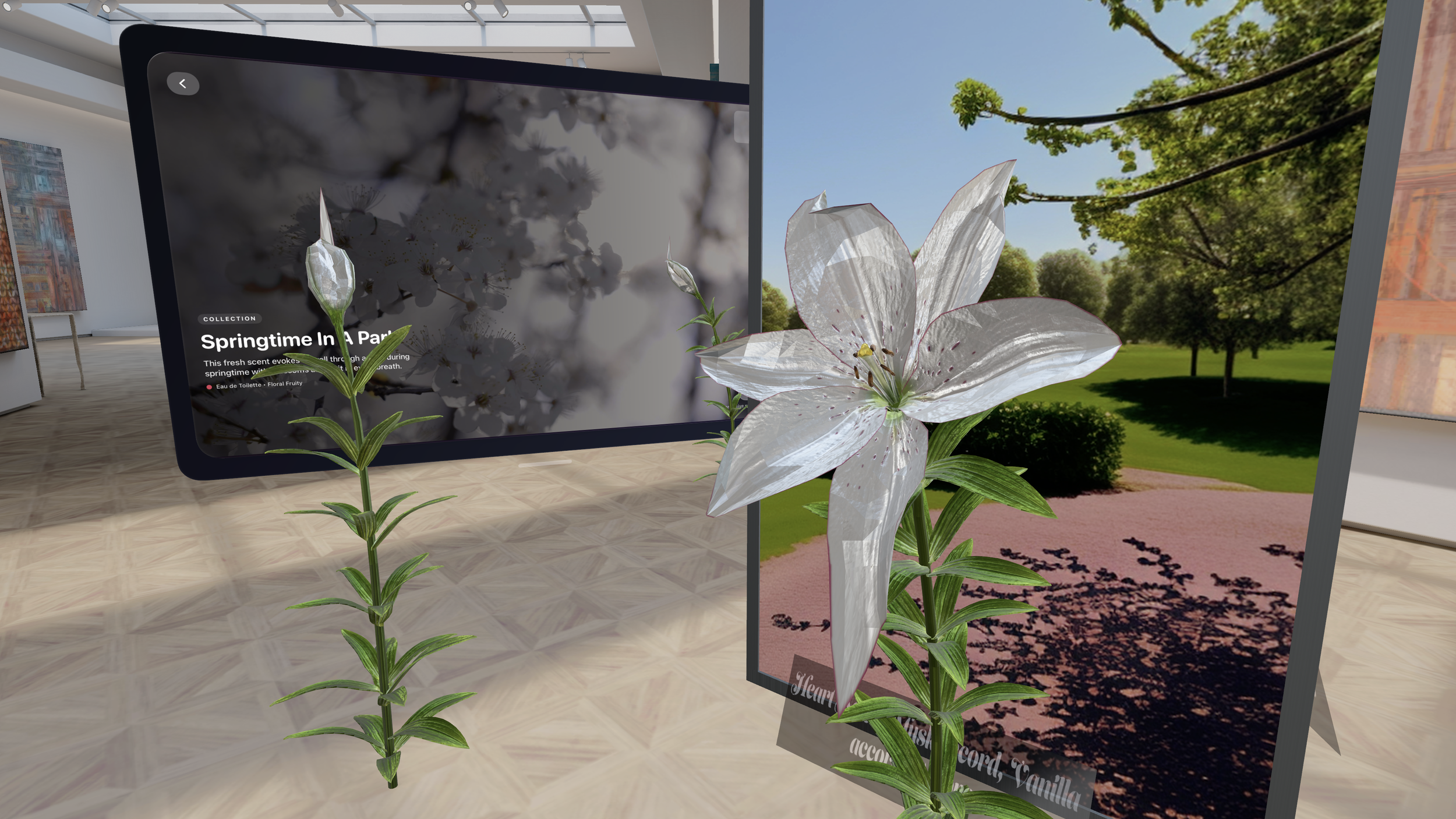
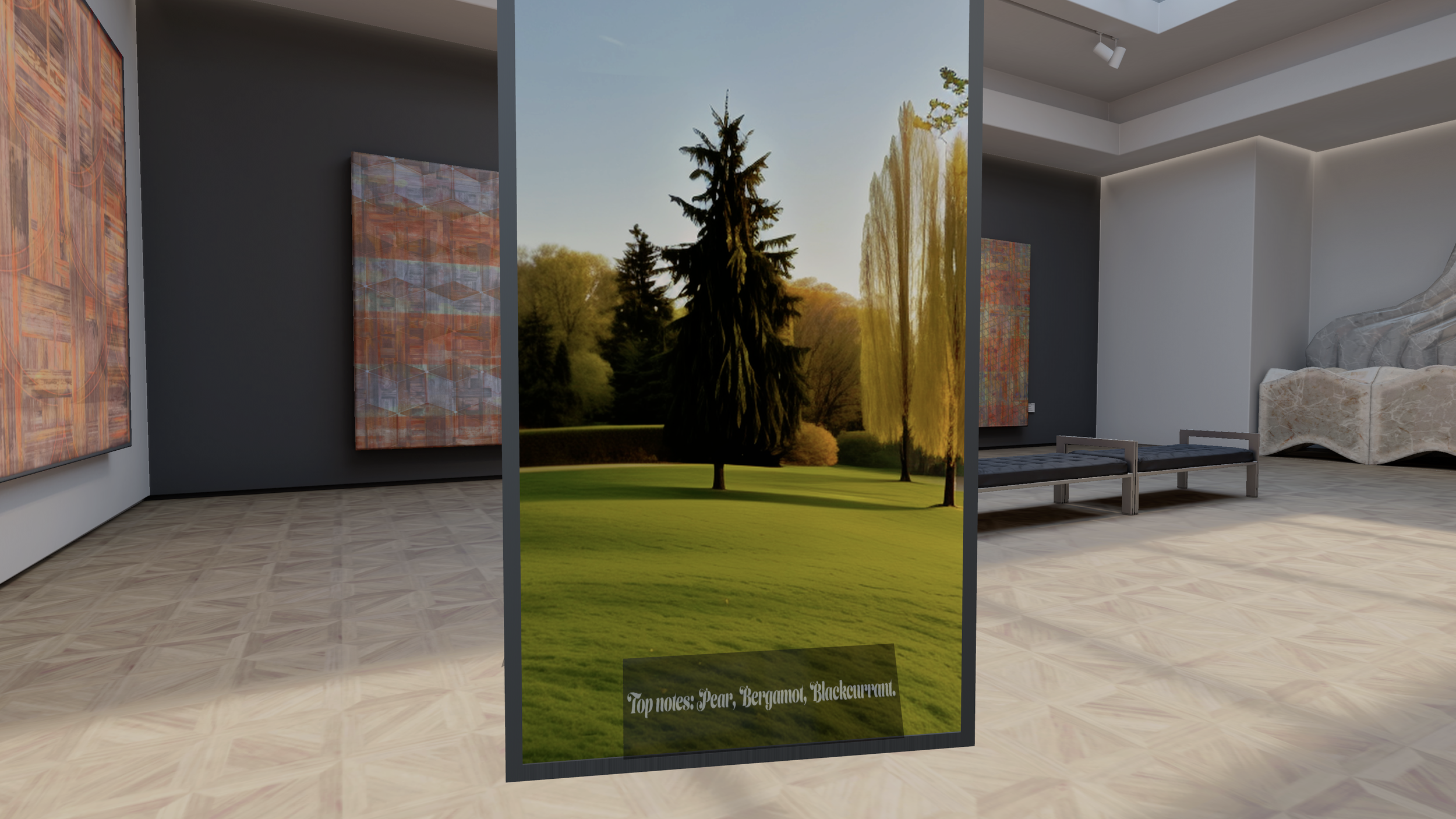
Lily → Springtime in a Park
A bright floral environment with blooming cues, sunlight warmth, and gentle spatial openness—built to feel alive and optimistic.
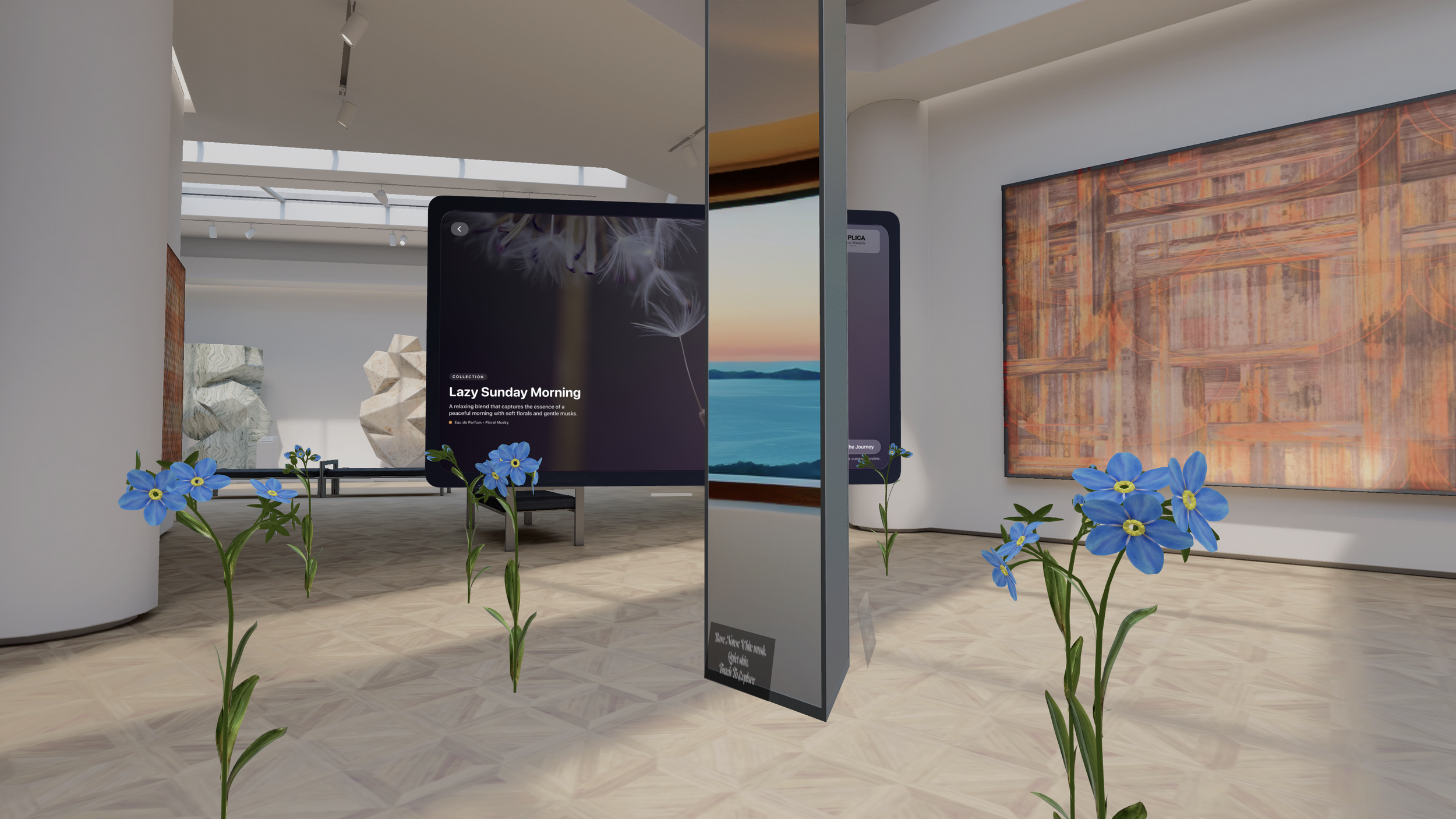
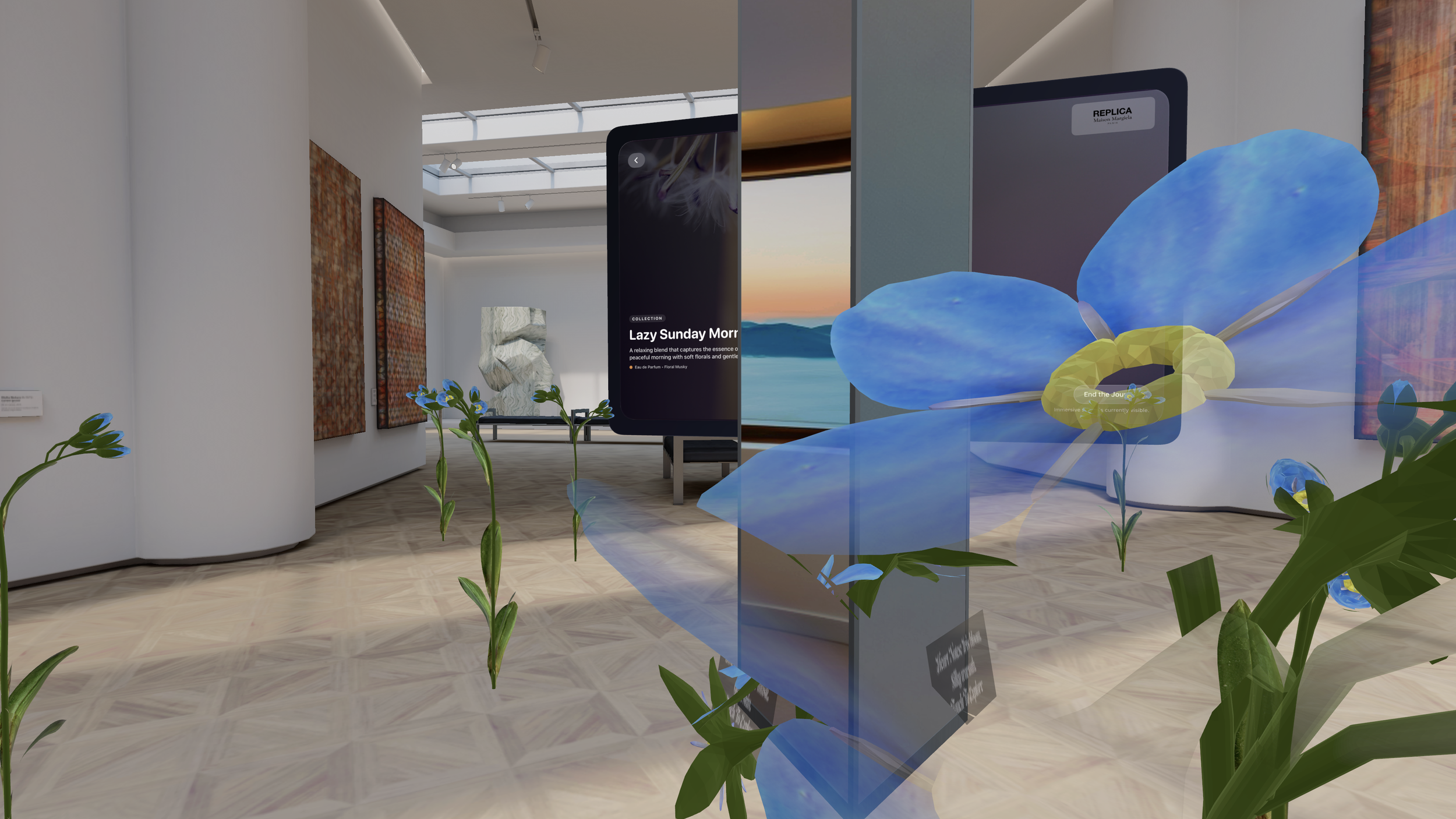
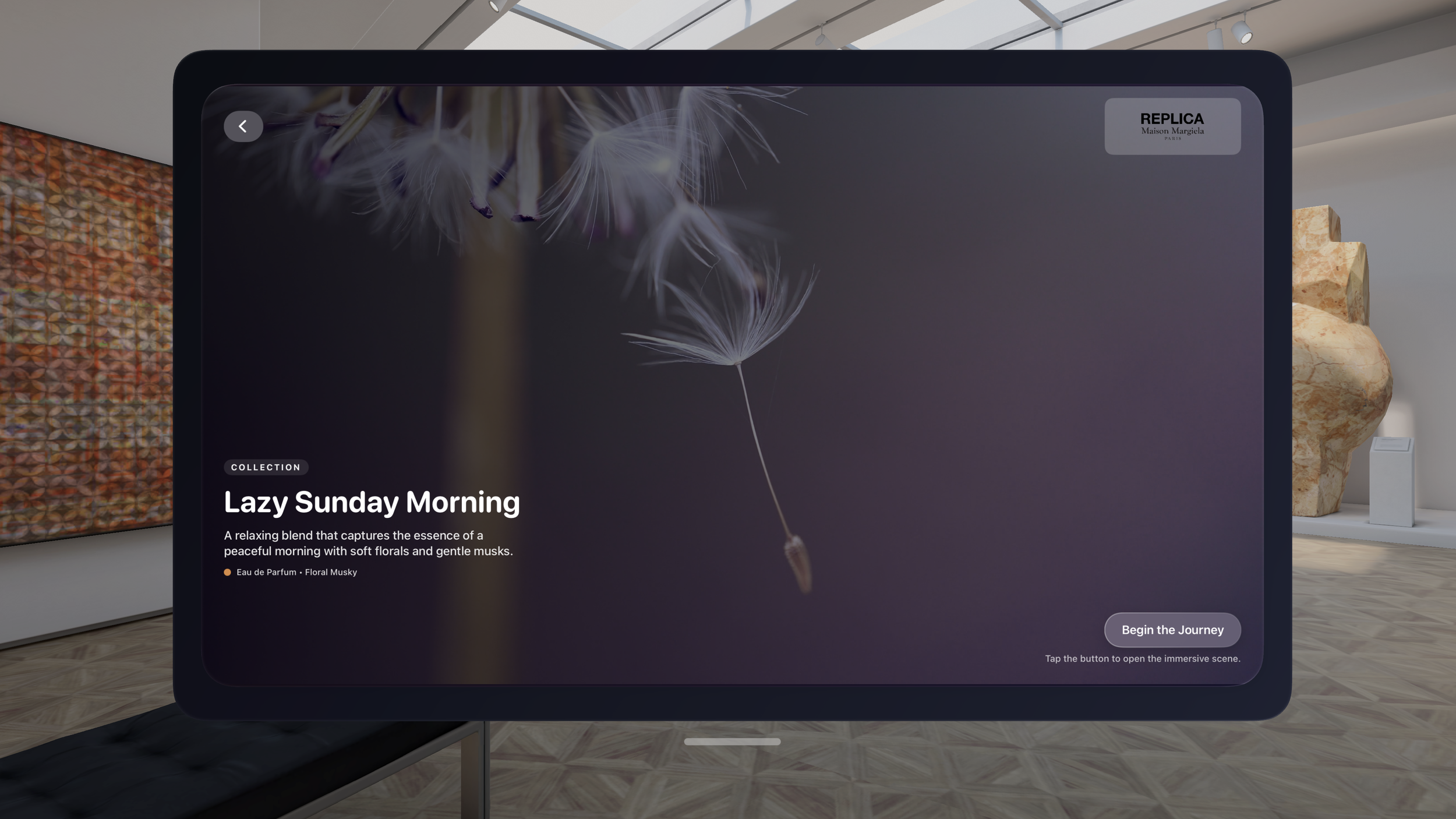
Blue Iris → Lazy Sunday Morning
A quiet, intimate atmosphere—cooler tones, softer pacing, and calm spatial density to express clean, private comfort.
Concept / Experience
Scent via Story
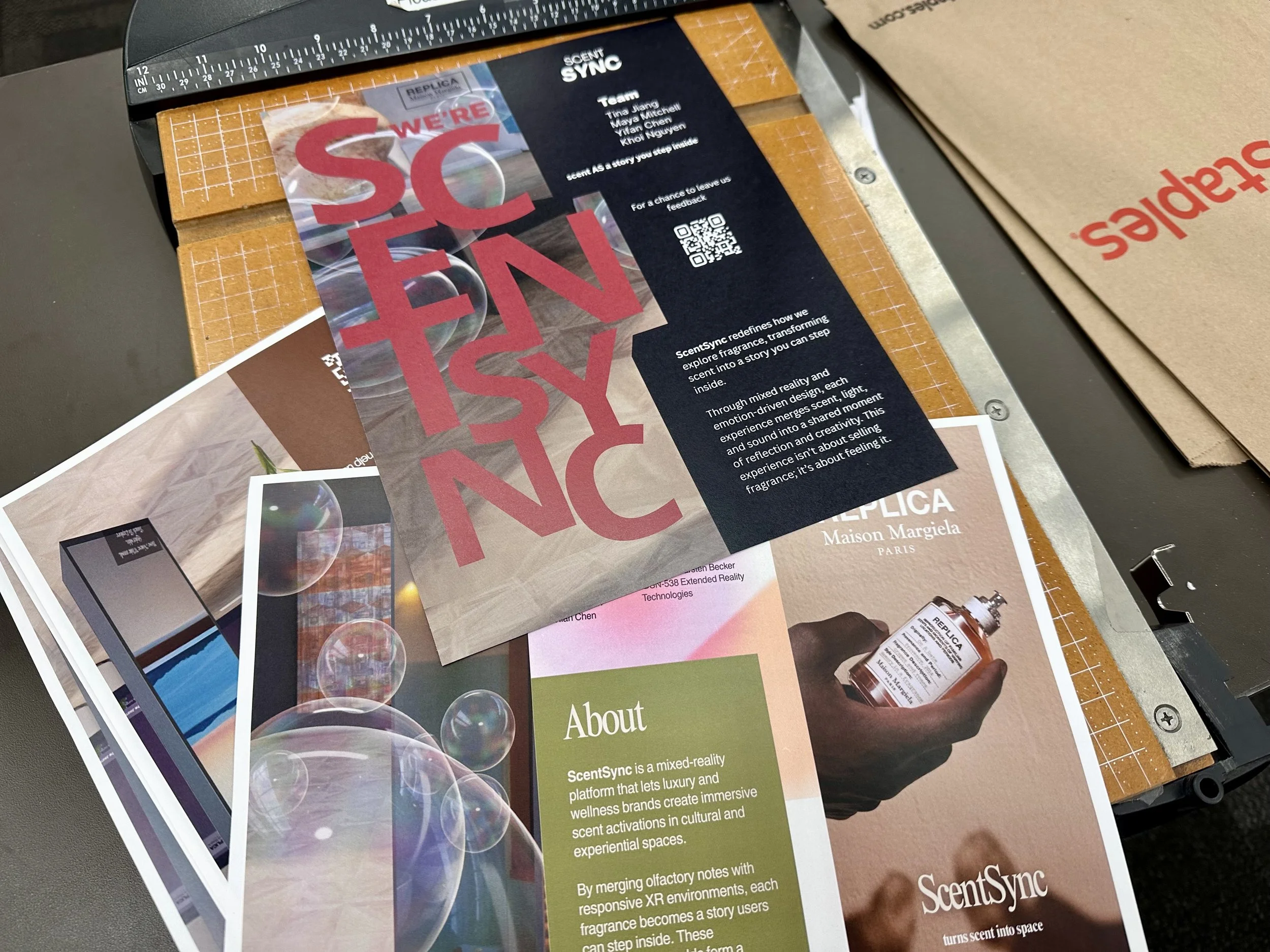
ScentSync redefines how we explore fragrance, transforming scent into a story you can step inside.
Through mixed reality and emotion-driven design, each experience merges scent, light, and sound into a shared moment of reflection and creativity. This experience isn’t about selling fragrance; it’s about feeling it.
Using mixed reality, users are transported emotionally, beyond just scent, into memory, mood, and environment. The experience unfolds in ‘third spaces’ like museums, pop-ups, lounges, art installations, fashion parties. The goal is to evoke feeling and connection through sensory storytelling.
-
Interactive fragrance notes
Fragrance notes are represented by 3D metaphors users can touch and explore. This turns a passive description into a physical moment.
Scene-based storytelling
Each scent becomes a narrative environment. Lighting, timing, sound, and animation work together to make the mood legible.
Seamless immersive transitions
Users can shift between scenes smoothly, allowing comparison across scents without breaking immersion.
Ambient sound + voice narration
Audio supports emotional interpretation, strengthening memory and improving clarity for first-time fragrance exploration.
-
Because this was an immersive system, the “design” was inseparable from the technical workflow. My process followed a loop:
1) Translate narrative into spatial composition
We started by converting fragrance identity into:
mood keywords
environmental metaphors (light, texture, space)
interaction targets (what users touch / trigger)
2) Prototype quickly in 3D
I blocked scenes in Blender using low-poly placeholders first:
to validate composition and readability
to estimate scale and spacing
to identify where animation mattered most
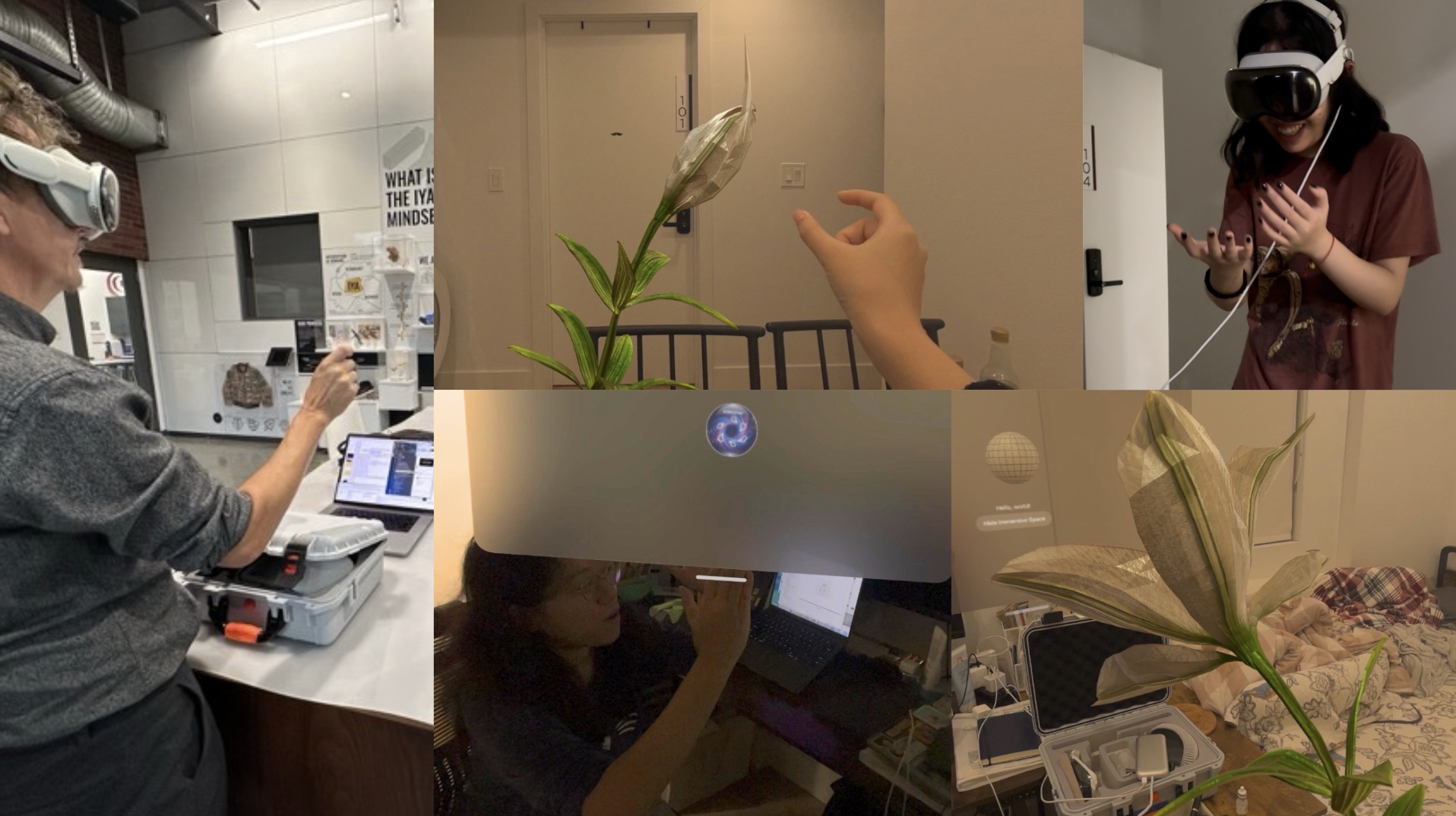
3) Export and validate in visionOS early
XR production is full of hidden constraints. The most important decision we made was testing early inside the actual headset so we didn’t overbuild assets that wouldn’t survive export/performance constraints.
4) Iterate for clarity + stability
Each build pass optimized:
animation reliability
object hierarchy
scene density and performance
interaction responsiveness
A major challenge: Geometry Nodes → Rigging pivot
One of the most defining moments of the project was discovering that my early animation approach wouldn’t ship.
What I tried
I originally designed a blooming flower effect using Blender geometry nodes, which produced beautiful procedural motion.
What broke
When exporting to USD / USDZ for visionOS, this method did not reliably preserve the animation behavior. Visual fidelity degraded and the animation became unpredictable.
The pivot
After extensive testing and debugging, I made a key decision:
Switch from procedural geometry nodes → skeletal rigging workflow
Why it worked
Rigging allowed:
consistent export behavior,
controllable animation timing,
and better runtime performance inside the headset.
This pivot was a critical shift from “looks good in Blender” to “works in the real product.”
-
Over multiple build cycles, I prioritized improvements that affected user perception most:
Immersion polish
smoother transitions between scenes
more readable object placement and spacing
improved lighting softness to reduce harshness in headset
Interaction clarity
simplified interaction moments to avoid confusion
ensured objects had clear affordances (what is interactive vs decorative)
Performance and stability
reduced scene complexity where needed
optimized asset scale and animation curves
maintained stable headset performance for demo conditions
Outcome
ScentSync culminated in a working immersive visionOS demo that translates fragrance identity into interactive spatial storytelling. The final experience features three distinct fragrance worlds, each designed with its own mood-driven environment, symbolic 3D note elements, and narration-supported pacing. By combining visual metaphor, interaction, and sound, the project demonstrates how spatial computing can bridge the gap between abstract fragrance descriptions and emotional understanding. Beyond the prototype itself, ScentSync serves as a proof-of-concept for how XR can enhance product discovery by making intangible qualities—like scent—more memorable, legible, and experiential.
Next steps
If extended into a more complete product experience, the next iteration of ScentSync would focus on turning exploration into personalization and long-term engagement. I would add user-facing features such as saving favorite scents, tagging moods, and building collections, enabling users to reflect on what they like and why. I would also develop a comparison mode that supports quick scene switching with memory cues to help users distinguish subtle differences between fragrances. On the immersive side, I’d expand interaction depth with more nuanced micro-interactions per note type, and introduce accessibility controls (audio intensity, brightness, motion pacing) to reduce sensory overload. Ultimately, the goal would be to evolve ScentSync from an immersive demo into a scalable fragrance discovery tool that could integrate retail product information and support real-world buying decisions.